Managed hosting has an image problem. It is frequently confused with simply being “expensive.” Naturally, this is an exaggerated cliché—but daily experience confirms that a certain skepticism prevails on this topic. Often, the scope and quality of the service are not properly understood. One quickly encounters blank stares when discussing specific monthly fees for Managed WordPress or Managed TYPO3 hosting. Translated, this means: “What on earth am I actually paying for?” There are, therefore, plenty of reasons to investigate the matter in more detail and list the ingredients that belong to managed hosting, as well as the questions one should ask providers of such services.
What Is Managed Hosting?
Managed hosting simply means “administered hosting”—and that is exactly what it is about, in contrast to unmanaged hosting, which I like to call “IKEA hosting” (because you have to find, set up, and monitor everything yourself).
In managed hosting, the provider supplies servers and the associated hardware in their own (or leased) data center for their customers and handles the setup, operation, and maintenance of systems and applications. The hosting model can be offered at various levels, for example, as platform or application hosting. In the first case, the operating system and server services are maintained for the customer, such as a LAMP system (Linux Apache MySQL/MariaDB PHP, although LNMP systems are increasingly requested today, where the Nginx web server is operated instead of Apache). However, management can also refer to applications, which must then be maintained and serviced in addition to the underlying system. 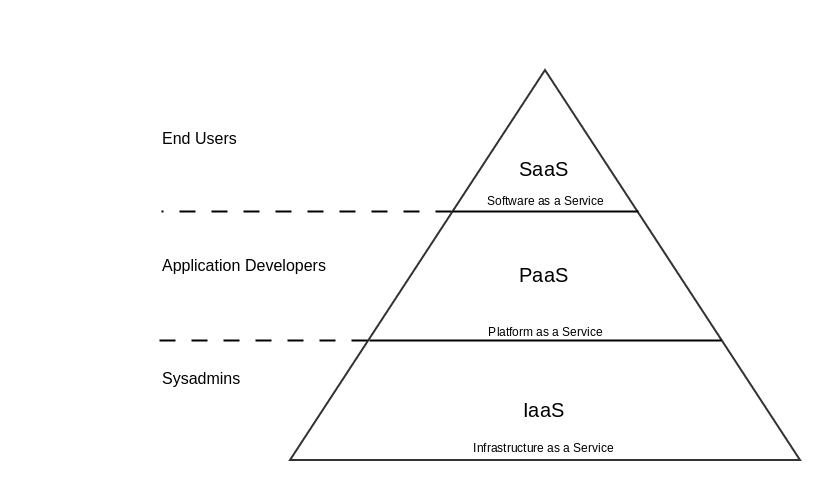
The term Software as a Service (SaaS) also essentially falls under managed hosting, though usually without individual configuration or human intervention. These are automated processes implemented within the “business areas” of Platform as a Service (PaaS) and Infrastructure as a Service (IaaS), which are the focus here. Therefore, SaaS is not treated specifically in this article.
The “maintenance” segment of managed hosting generally includes installing all operating system updates and server applications, as well as monitoring that services are performing their tasks correctly. The latter point is one of the strongest arguments for managed hosting, as many companies would quickly reach their limits if they had to monitor and guarantee system and application operations entirely on their own. The scope of service in managed hosting should also include keeping unavoidable downtime for maintenance and upgrades to a minimum and scheduling it so that regular operations are affected as little as possible. Managing this in-house is no small task.
Finally, a particularly important aspect: managed hosting facilitates compliance with Service Level Agreements (SLAs). Especially in service-oriented industries, maximum availability and performance in IT are vital for the service providers concerned, particularly since the competition is only a click away for the customer if systems and applications do not “deliver” optimally. Possible legal implications regarding SLA (non-)guarantees will not be discussed here.
How Does Managed Hosting Differ from Classic Hosting?
In classic hosting, the customer rents the data center’s own resources, and the provider guarantees various parameters within this framework, such as storage space and performance (CPU, RAM, SSD/SATA, etc.). This is usually (but not always) documented in a concise SLA.
The decisive point is this: the setup, commissioning, and subsequent “fate” of applications fall entirely under the customer’s responsibility. Hosters often offer tools for this (so-called “1-click applications”) intended to make these steps as simple as possible. However, they often achieve the opposite and overwhelm many users rather than making administration more pleasant.
Caution is also advised in the following respect: products are repeatedly advertised on the German market as “Managed Servers” when they are not. These are servers managed by the hosting provider regarding the operating system and individual services, but they are uniformly configured and do not allow for changes. The operating system and services are often completely outdated because the provider wants to keep their maintenance effort as low as possible. Furthermore, the customer only receives user access, not root access. Based on these points, one should judge where the line between classic and managed hosting lies when both models appear quite similar at first glance (at least at the operating system level). Announcements such as “Super-fast 8-core SSD server for price-conscious professionals” should generally be treated with caution, and one should look closely at which hosting services are actually included.
Which Services Are Part of Managed Hosting?
When choosing a hoster, one usually looks at the “hard facts” first—the technical and operational performance features. However, one should pay just as much attention to the topic of consulting. It speaks well of a hosting provider if consulting is explicitly mentioned as a separate service. It is often free of charge up to a certain extent and is then billed based on effort/time. In any case, it is an important criterion for evaluating providers and offers.
Regarding specific hosting services, the topic of configuration and updates is a central point. The hosting provider should guarantee updates on many levels, such as for kernels and system libraries, but also for SSL protocols and server-side dependencies (e.g., PHP/Perl). Installing new application versions is just as much a core task as setting up and changing individual application configurations according to the customer’s needs and requirements. The variety of standard services offered is generally an important indicator of whether you are dealing with “true” managed hosting.
What About Security?
Fail-safe IT operation is certainly a primary reason for considering managed hosting. Assessing the many possible risks and taking early and efficient countermeasures requires not only significant expertise but also personnel resources, which smaller companies, in particular, simply cannot provide in many cases.
Since this point is primarily about trust, one should look very closely at what a managed hosting provider has to offer in terms of security measures. This definitely includes regular malware checks, a firewall, intrusion detection systems, and, of course, prompt patching after security-relevant program updates become known. It goes without saying that these measures must be carried out seamlessly at all levels.
Another central aspect is service availability monitoring. This involves permanently checking whether services are reachable and functioning—especially at the agreed and expected speed. “Reachability” is, of course, a matter of definition; after all, it can certainly happen that users of a specific provider cannot reach the service at a given moment. Monitoring should therefore be carried out from various servers distributed worldwide to provide a better picture of actual availability.
What Should Be Considered Regarding Reliability?
Current and future hardware is becoming increasingly better and more reliable. However, it would be negligent to claim that technical failures in components, hard drives, etc., are no longer an issue, as these often run around the clock and at full capacity.
Since replacement actions are unavoidable in such cases, the managed hosting provider must take appropriate precautions to ensure the smooth operation of the customer’s systems and applications. Here, it is advisable to examine terms such as redundancy, RAID, or failover IP.
Of course, operational failures can also stem from the software side, for example, if faulty file systems write data incorrectly to the hard drive under certain conditions. The provider must also have countermeasures ready for these cases, ranging from a complete service or VM restart to the lag-free restoration of uncorrupted backups. It is therefore strongly advisable to look more closely at the service offering in this area, or to pay special attention to the Service Level Agreement (SLA). This is not an exclusive “accessory” of managed hosting, but it should be laid out there in great detail and go far beyond the scope of classic hosting. In classic hosting, SLAs usually end at server reachability (“ping”) or merely include hardware guarantees (e.g., a defective hard drive will be replaced within x hours after notification).
Who Is Managed Hosting For?
As this article has shown, managed hosting represents a range of services covering all aspects of professional IT administration, from the setup/mapping of infrastructures and application processes to the guarantee of performance levels and reliability. Those simply looking for a framework for IT operations to compensate for a lack of personnel resources in the IT sector are generally well-served by classic hosting. The added value of managed hosting naturally comes at a price, which is why the question of cost-effectiveness is always paramount. Perhaps it can be summarized like this: managed hosting is primarily aimed at commercial users who recognize the advantage of outsourcing certain work processes to focus on others.
Can You Save Costs with Managed Hosting?
This question is essentially pure mathematics and must be weighed in each individual case, as many factors with different weightings come into play. As everywhere, the rule applies: those who invest more can also reap more—if the investment is made correctly.
In any case, a clear trend toward managed hosting has been recognizable for several years. In this respect, one can assume that the cost-effectiveness of the model is generally assessed positively, if only because the transparency regarding promised services and costs to be paid is very high. Or to put it another way: managed hosting makes calculation relatively easy.
Fundamentally, one should consider the following points more closely when deciding whether managed hosting makes sense for economic reasons:
- Time factor: How much working time does your own IT operation tie up, and how much of that is needed more urgently for actual business processes?
- Resource factor: How many employees are occupied by IT administration? Is it one of their core tasks, or do they do much of it more or less “outside their field”?
- Quality factor: Is there enough internal know-how to map the complexity of modern IT operations, and does the technical-infrastructural equipment meet the requirements—not only currently, but also looking ahead to the future?
If one examines the points mentioned more closely, managed hosting will certainly quickly become a very viable alternative.
Are you looking for a home for your website? With us, it runs on managed hosting—complete with updates, backups, and monitoring. To the Hosting Offers